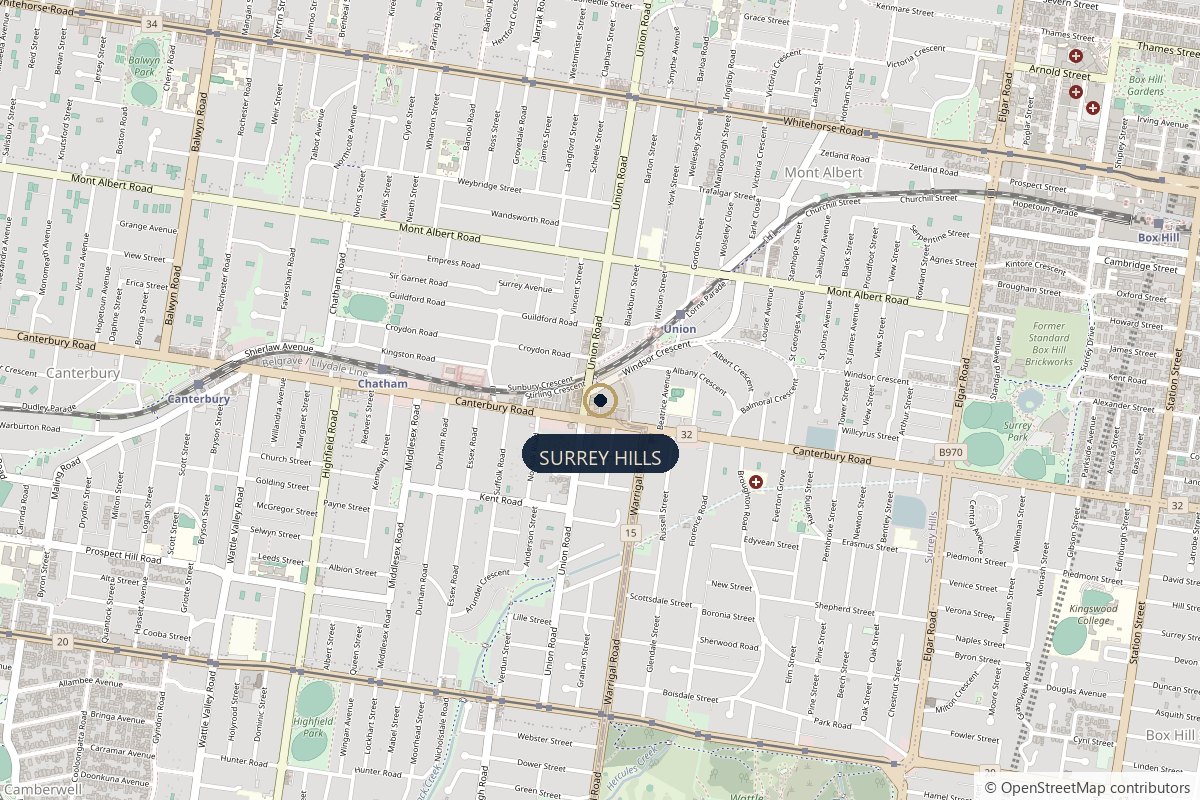
Surrey Hills is one of the inner east's most tightly held pockets — period homes, tree-lined streets, trains and trams, and buyers who have been watching it for years. Getting in takes preparation rather than luck.

Surrey Hills sits about 11 to 12 kilometres east of the city, with Union and Chatham stations on the Belgrave and Lilydale lines and trams along both Whitehorse and Riversdale Roads. The housing is dominated by Edwardian and interwar homes on established streets, many under heritage or neighbourhood character controls. Prices have eased slightly over the past year, which has created genuine opportunities — but only for buyers who can tell a properly restored home from an expensive cosmetic renovation.
A period facade tells you nothing about the stumps, the wiring or the roof. In Surrey Hills, the building inspection is the most valuable thousand dollars you will spend. — Justin Valentine
Fresh paint and a new kitchen are cheap. Restumping a 1915 weatherboard, rewiring, replacing a terracotta roof and treating rising damp can run well past $150,000 combined. On every period home I bring in a specialist inspector and price the real work into what we are prepared to pay.
Large parts of Surrey Hills sit under a Heritage Overlay or neighbourhood character controls, which govern demolition, front fences, window replacement and second storeys. I pull the planning property report before we inspect, so the rear extension you are counting on is not refused two years later.
Union and Chatham stations and the 109 and 70 trams are why people pay to be here. They are also why a Whitehorse Road frontage trades at a discount. I will walk a shortlisted street with you at 8am on a weekday, not just at a Saturday open.
The median has come back over the past year while the clearance rate held at 72.1%. That gap means well-presented homes still draw a crowd and everything else is negotiable. Every offer I write is anchored to verified sales from the last 90 days, not the agent's quote range.
Figures for the 12 months to June 2026. Surrey Hills has softened while clearance rates stayed strong, which is an unusual combination and worth understanding before you bid.
12 months to June 2026
A far more accessible way into the postcode
Prices have eased, creating room to negotiate
Houses, from listing to sale
Strong — well-presented homes still sell under the hammer
Because the two measure different things. The clearance rate tells you what proportion of auctioned homes sold. The median tells you what buyers actually paid. Over the past year Surrey Hills has seen strong bidding on well-presented homes and softer results on everything else, and the median has drifted down about 4%.
For you that means quality still draws a crowd, while compromise stock is negotiable in a way it has not been for years.
Around the median, expect a three or four bedroom period home on a modest block, in original or partly updated condition, likely needing work within five years. Fully renovated homes on larger land start closer to $2.6 million.
If that is beyond your budget, the unit and townhouse market has a median near $900,000 and includes some excellent single-level options for downsizers.
It depends entirely on what has already been done, but for an unrenovated Edwardian I would budget realistically rather than optimistically. Structural work, services and a rear extension add up quickly, and heritage controls can restrict your options.
I will always tell you when a property's renovation cost makes the purchase price unworkable, even if it means walking away from a home you love.
Surrey Hills Primary and Chatham Primary are the main government primary catchments, with Canterbury Girls Secondary College and Box Hill High School among the secondary options. Boundaries are address-specific.
I verify each shortlisted address on Find My School before you commit, and I will tell you honestly if a zone claim in a listing does not hold up.
For some buyers, genuinely yes. You are closer to the city, you have trams as well as trains, and the streetscapes are irreplaceable. For others it is a $600,000 premium for a smaller block.
I do not earn more if you spend more, so you will get the straight answer for your circumstances rather than the flattering one.
Yes. Vendor advocacy sits alongside the buying work at no additional cost to you, because it is paid from the selling agent's existing commission rather than added on top.
Coordinating a sale and a purchase is where most of the stress in a move comes from, and having one person managing both timelines makes a real difference.
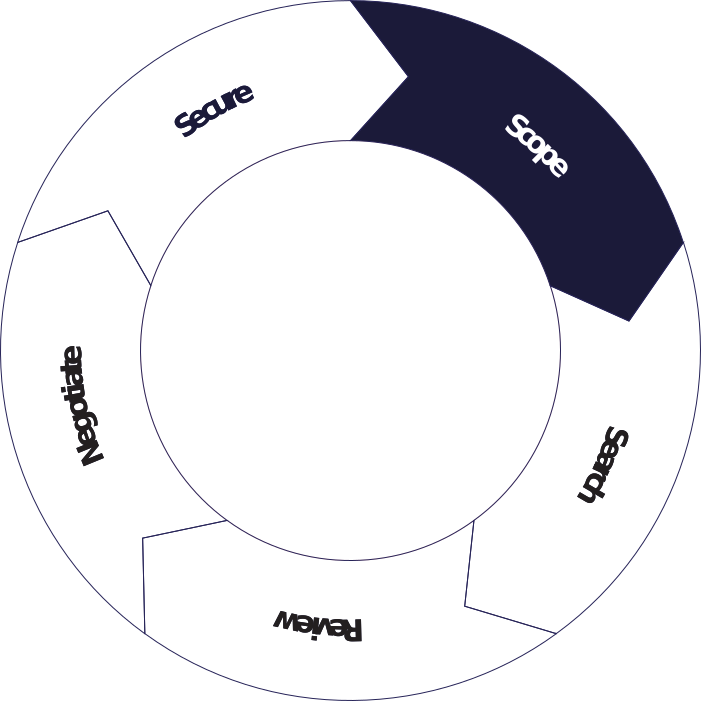
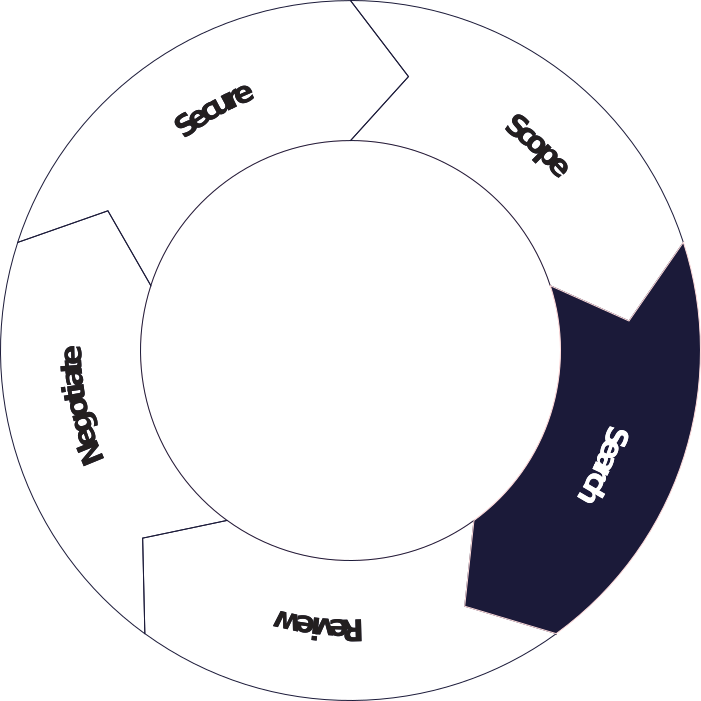
You'll always know what's happening next. Here's how we move from first conversation to the keys in your hand.
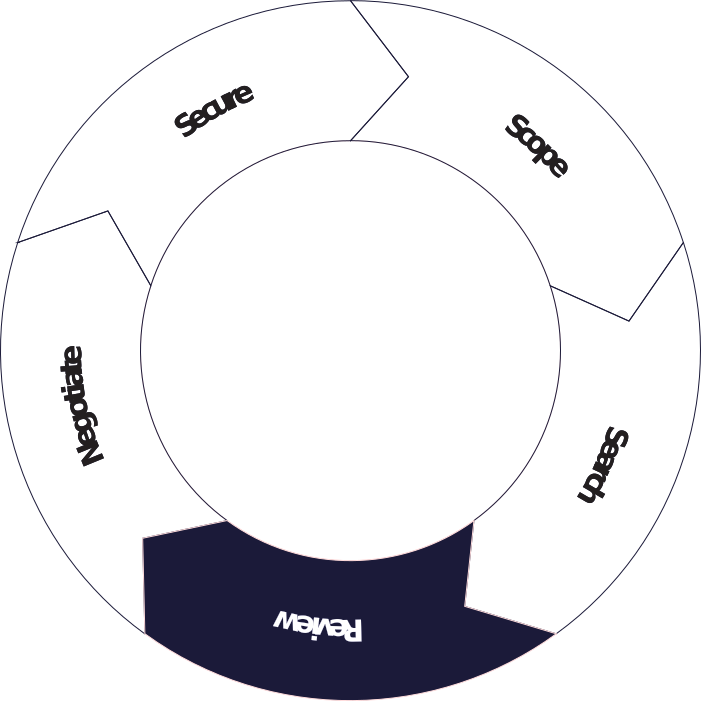
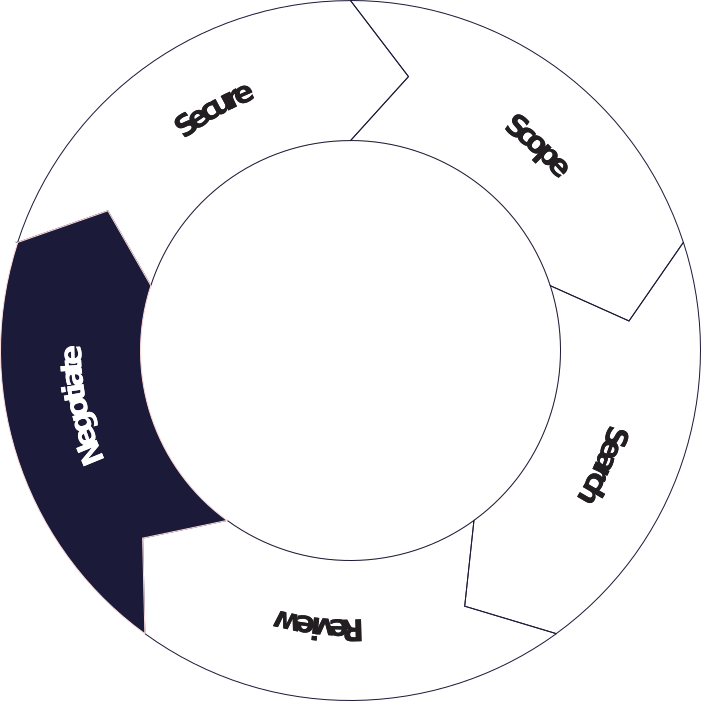
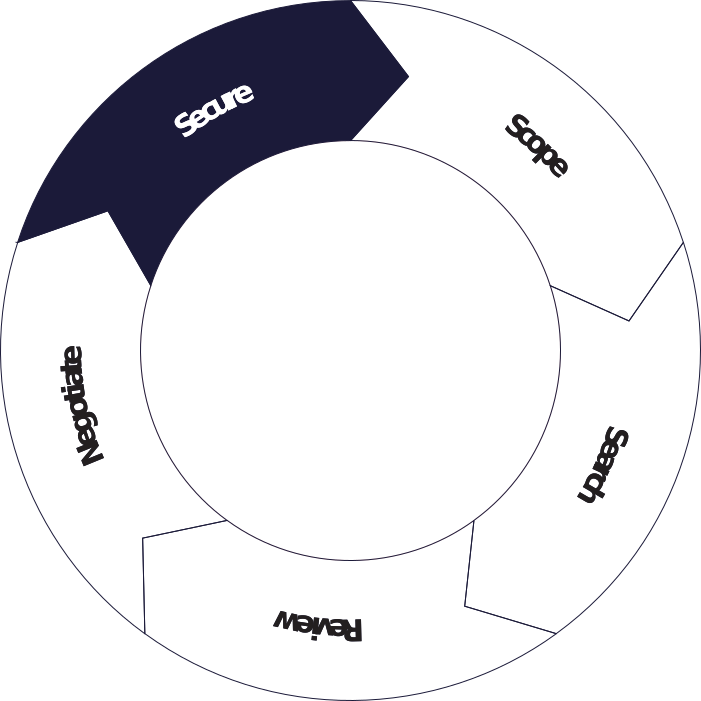

The words that come up most often are calm, informed, supported and protected. That's exactly how buying a home should feel.




We needed help with finding a new home. We tried doing it ourselves but it became so challenging. Justin was exceptional from start to finish. From the first phone call, he navigated the entire purchase of our new home with absolute confidence and calm, making what could have been a stressful process feel seamless. From managing conversations with real estate agents to handling negotiations and due diligence, he took ALL the stress off our shoulders. We always felt informed, protected and one step ahead. It was such a relief to have him in our corner! Justin's professionalism, strategic approach and steady guidance gave us total confidence in every decision and ultimately secured a fantastic result at an online Auction. Nothing was ever too hard for Justin, you can ask him anything and that's the difference. We couldn’t recommend Justin more highly.
Read more
What a pleasure to have dealt with Justin! We appreciated his insight, guidance and feedback on properties we considered to buy. Having someone in your corner like Justin with his calm demeanour that you could trust and have open honest communication with, was priceless during the stressful time of finding and buying a house during these competitive times. Especially during making offers and negotiations he assisted us with such ease. Thank you Justin! You definitely helped us find and secure our dream home faster and with less stress than if we were to do it on our own. Can't help but feel a bit sad that we won't continue our regular check-ins and chats on our house hunting sessions! Just reach out to Justin and ask your questions, I have no doubt you'll see what I mean
Read more
A trusted friend suggested a Buyers Advocate who I spoke with initially, but as he worked outside metro Melbourne, referred me onto trusted friend and colleague. He confirmed that Justin had capacity to work with me. I had bought numerous times on my own in Melbourne but was living several hours out of the city, under intense time pressures, and alarmed by the v high numbers at Opens I had attended. Justin clarified the tasks I wanted him to undertake, promptly researched and inspected two properties on my shortlist, and proceeded to make offers within my limits. I/we succeeded on yet another property, to my delight, which also required multiple offers to succeed. Justin's work saved me many hours time and travel; the increase of his his offers were much lower than I would have expected, so saving me significantly; and he established good rapport with vendors agents so he was able to indirectly "read" expectations of vendors. Justin attended the final inspection with me, checking functional state of house fittings, and liaised with my legal conveyancer. He was happy to provide phone consultation with another family member in a complex auction situation. I move in today! Thank you, Justin.
Read more
We recently worked with Justin on a property that we were selling that he successfully secured for his clients. As an agent, it was refreshing to deal with a buyer advocate who communicated so well and I strongly felt that he had his clients best interest in mind. Would highly recommend him to any buyers needing an advocate!
Read more
Working with Justin was fantastic! His communication skills second to none. Reliable, helpful and dedicated to his clients needs. Looking forward to working with him again. Thank you Justin!
Read more
Initially, we resented having to resort to engaging a buyer’s advocate due to the difficulties we experienced trying to deal with real estate agents, shadowy practices in terms of pricing and always being beaten out by deeper pockets and games being played, but having engaged Justin , we soon had real leads that hooked us up with a genuine and honest real estate agent and managed to purchase a property within a month! Justin’s contacts managed to give us access to off market properties,which gave us a chance to compete and eventually secure the property of our dreams. Justin passed our initial quizzing with flying colours , his patience and understanding, and more importantly his ability to listen to us and transpose that into our home was really appreciated. We would highly recommend Justin as a calm, unassuming presence to help lead anyone through this stressful process! Thank you Justin!
Read more
Justin is an excellent buyers advocate who truly cares about his clients and really invests in getting the best outcomes for them. He’s genuine, supportive, and just a great person to deal with — someone you can trust to guide you through the process and deliver great results. Highly recommend Justin to anyone looking to buy a home in Melbourne East.
Read more
I recently had the pleasure of working with Justin for the first time to secure a home. From the outset, the process showed signs of being a bit complex, and I knew I didn’t want to navigate it alone. Justin was absolutely fantastic—attentive, thoughtful, and incredibly supportive throughout. He offered valuable advice and truly partnered with me every step of the way, never once trying to push or override my decisions. I highly recommend Justin to anyone looking for a knowledgeable, respectful, and genuinely caring professional.
Read more
Justin is an absolute professional. His knowledge is First Class, he is honest and gives 100% effort to everything he does. Highly recommended.
Read more
Justin is very professional, and patient agent. He helps his clients to sort out all the issues, and provides the relative resource when there is a problem. Would recommend him if you are looking for a buyers agent
Read more
Absolute pleasure working with Justin throughout a very successful auction campaign. Always extremely thorough and prompt with communication always thinking from the clients perspective and with their best interest at heart. Would not hesitate to recommend Justin to help navigate through the buying/selling process of property.
Read more
Justin is amazing and has saved me lots of time and effort in the process of purchasing my property. He went above and beyond to make the purchase seamless for me, including local market research, buyer due diligence and negotiations with the selling agent. I have been so impressed with Justin that I've also engaged his services as a Selling Advocate for the sale of my current property. I'd highly recommend Justin's services - both as a buyer's agent and also as a seller's advocate.
Read more